

Brush your teeth twice a day with a soft-bristled brush. The size and shape of your brush should fit your mouth allowing you to reach all areas easily.
Replace your toothbrush every three or four months, or sooner if the bristles are frayed. A worn toothbrush won’t do a good job of cleaning your teeth.
The proper brushing technique is to:
Place your toothbrush at a 45-degree angle to the gums.
Gently move the brush back and forth in short (tooth-wide) strokes.
Brush the outer surfaces, the inner surfaces, and the chewing surfaces of the teeth.
To clean the inside surfaces of the front teeth, tilt the brush vertically and make several up-and-down strokes.
Of course, brushing your teeth is only a part of a complete dental care routine. You should also make sure to:
Clan between teeth daily once a day. Tooth decay-causing bacteria still linger between teeth where toothbrush bristles can’t reach. This helps remove plaque and food particles from between the teeth and under the gum line.
More information visit Bhardwaj Dental Hospital.


 Traditional bridges are the most popular types of dental bridges for restoring lost teeth. They can be used when you have natural teeth or implants on either side of the space left by your missing tooth.
 This cantilever bridge is used when there is only one anchor tooth available to support the missing tooth or teeth. This bridge design is not recommended for use in the back of the mouth where too much bite force can be put on the abutment tooth. But it can work if it’s designed well and if the cantilevered tooth is the front tooth. The biting forces must be considered in the design which can be done by a good lab making these types of dental bridges a valuable option when trying to save time and money.
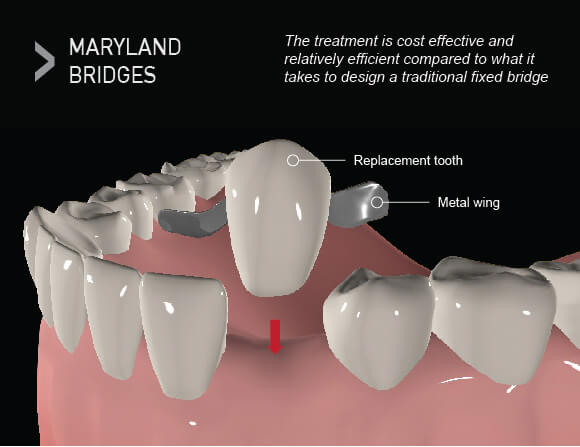 This type of bridge is a winged bridge known for its conservative nature. These types of dental bridges are often referred to as a resin bonded bridge. Basically they’re designed with plastic teeth with similar gum material which is fortified by a metal frame.
 For people with one or two missing teeth who are looking for an easy and affordable solution to their replacement issue, a composite bridge often fills the bill. There usually made and installed in one dental visit, in which a composite bonding material (which is the plastic tooth filling material) is placed directly into the missing space.
 The implant supported bridge has been rising in popularity over the years, because there is normally no damage to the adjoining natural teeth. There is no support needed by trimmed down tooth stubs with crowns or bulky substructures, these types of dental bridges are supported exclusively by implants. This type of bridge allows adequate spacing for you to clean between the dental implants, and if integrated well there incredibly stable.

